How to Choose the Right Name for Your Cafe
A cafe name does more work than most owners expect. It sits on your sign, your cups, your Instagram profile, your Google listing, your payroll forms, and, if things go well, in other people’s routines. A good one can help a business feel memorable before the first sip. A weak one can make a promising concept harder to explain, easier to forget, or expensive to fix later.
I have seen owners spend months on flooring, equipment, and menu development, then settle their name in an exhausted half hour. Usually that decision comes back around. Six months later, they realize the name sounds like every other neighborhood spot, or it attracts the wrong expectations, or nobody can spell it. Renaming after launch is possible, but it is messy. Signs, menus, packaging, domain names, search listings, and customer habits all have to be rebuilt.
Choosing the right name for your cafe is not a branding exercise in isolation. It is an operational decision, a marketing decision, and, in some cases, a legal one. The best names do not just sound attractive. They fit the business you are actually building.
Start with the business, not the wordplay
Before you brainstorm names, get uncomfortably clear on what your cafe is trying to be. A name for a high-volume commuter coffee bar should solve a different problem than a name for a slow, design-driven brunch cafe. The same goes for a family-run neighborhood place, a specialty coffee shop with rotating single origins, or a bakery cafe built around morning pastries.
Ask yourself what customers should feel when they hear the name for the first time. Warmth? Speed? Craft? Familiarity? Curiosity? If your concept centers on comfort and routine, a sharp, abstract name may fight you. If your space is contemporary and design-conscious, an old-fashioned name might dull the edge unless that contrast is intentional.
This is where owners often get seduced by names they personally like, without asking whether those names support the concept. A founder may love an obscure literary reference or a clever pun. That can work, but only if the audience can carry it easily. Customers should not need a story before they can remember where they had a good flat white.
I once worked with an operator who wanted to call his cafe after a sailing term. He loved boats, had grown up around marinas, and thought the word sounded sophisticated. The problem was that nothing about the cafe connected to sailing. The interior was warm and rustic, the food leaned local and hearty, and the location was a residential neighborhood nowhere near water. The name was elegant on paper, but disconnected in practice. Once we shifted toward names tied to the feeling of the place rather than the owner’s private interests, the options got much stronger.
The best names create the right expectations
A cafe name acts as a promise. Not a detailed one, but a directional one. It tells people what kind of experience they are likely to have and whether the place might be for them.
If your name sounds fast and practical, people may assume grab-and-go service. If it sounds indulgent or romantic, they may expect a lingering atmosphere, plated desserts, or a polished interior. If it sounds highly specialized, some guests will be intrigued and others will assume it is not for them.
That is not a reason to play it Cafe safe. Distinctive names often perform better than generic ones. It is a reason to be intentional.
“Main Street Cafe” may tell people where you are, but it does almost nothing to separate you from every other cafe in search results or memory. “Daily Crumb” suggests baked goods and routine. “North Window” hints at mood and design. “Third Bell” feels slightly mysterious, perhaps urban, perhaps ritualistic. Each pulls expectations in a different direction.
The useful question is not “Do I like this name?” It is “What picture does this name create in a stranger’s head?” If that picture matches your concept, you are getting somewhere.
The common naming traps that cost owners later
Most weak cafe names fall into a few predictable categories.
Generic names are the most common. They are safe, broad, and almost invisible. Think of combinations like “Corner Cafe,” “Urban Brew,” “Daily Grind,” or “Bean House.” None of these are bad in isolation. The problem is that they are so familiar they blur together. Search for them and you are competing with dozens of businesses using nearly identical language.
Another trap is leaning too hard on trends. A name that sounds current in one season can feel dated surprisingly fast. Minimal one-word names, faux-French styling, overused coffee terms, and lifestyle words borrowed from social media aesthetics all go through cycles. Trend-aware is fine. Trend-dependent is risky.
Then there is the clever pun. Puns are not always a mistake. In the right setting, they can make a place feel approachable and fun. But they often split audiences. Some customers love them. Others read them as gimmicky, especially if the cafe aims for quality or refinement. If your coffee program is serious, a joke name can undercut the perception of care unless the rest of the brand balances it.
Finally, there are names that are too personal to the founder. A childhood nickname, a local in-joke, an inside reference to a trip abroad, or the name of a beloved pet may matter deeply to you and very little to anyone else. Personal roots can be powerful when they translate into a story customers can understand. They become weak when the meaning stays locked in your own history.
What makes a cafe name strong
Strong names tend to share a few qualities even when they are stylistically different. They are easy to say. Easy to remember. Distinct enough to find online. Aligned with the customer experience. Flexible enough to live on a sign, a cup, and a social handle without becoming awkward.
They also leave some room for growth. If you call your business “The Pancake Porch,” then decide later that your revenue really comes from coffee subscriptions, retail beans, and evening wine service, the name starts to constrain you. A name does not need to forecast every future move, but it should not box you in unnecessarily.
Shorter often helps, though not always. A three-syllable name can be perfect. A six-word name usually creates friction. Names with unusual spelling can be memorable, but they can also create endless correction. Every extra bit of explanation adds cost over time. Customers who cannot spell your cafe name may still visit once, but they are less likely to find you again quickly, tag you correctly, or recommend you effortlessly.
One useful test is to imagine saying the name out loud in everyday situations. “Let’s meet at ___.” “I’m grabbing coffee from ___.” “Have you tried ___ yet?” If the sentence flows naturally, that is a good sign. If people stumble, ask for repetition, or mishear it, pay attention.
Naming from place can work, but only if it is specific
Location-based names are popular because they feel grounded. They can also build local loyalty quickly. But there is a big difference between a generic place reference and one with texture.
A cafe named after a precise landmark, a historic building, a local street with character, or a regional phrase can feel rooted and memorable. A cafe named after a vague district or overused directional term often fades into the background.
The nuance matters. “Elm & Stone” carries more atmosphere than “Downtown Cafe.” “Station House” might suggest rhythm, movement, and architecture. “West Side Coffee” says almost nothing unless the neighborhood itself has strong identity and loyal residents who claim it.
The caution here is longevity. If your neighborhood is changing, if you might open a second site elsewhere, or if your current location is less permanent than you hope, an ultra-specific geographic name can become limiting. Some owners do not mind this. Others regret it once expansion enters the conversation.
Family names and founder names can be excellent, with one condition
Using a family name can bring authority and warmth. It often signals pride, continuity, and ownership. In hospitality, those things still matter. People like feeling that there is a real person behind the business.
But the name needs to work for the customer who has never met you. A family surname that is crisp, pronounceable, and visually clean can be strong. One that is difficult to say, frequently misspelled, or visually crowded may create unnecessary friction.
If you are tempted to use your own name, test it honestly. Do strangers get it on the first try? Can they spell it after hearing it once? Does it suit the style of the cafe? “Rossi” and “Hartwell” behave differently than a twelve-letter surname with three silent consonants.
There is also a subtle branding question. Founder names tend to pull attention toward heritage and personality. If that is part of your story, good. If your concept is built more around a mood, an ingredient focus, or a design vision, another naming route may serve you better.
Think visually as early as possible
A cafe name is heard, but it is also seen constantly. Some names sound lovely yet look clumsy on a storefront. Others are forgettable in conversation but come alive in typography.
This is where early visual testing saves time. Write the name in plain text. Then picture it on a round cup stamp, a narrow awning, a neon sign, a dark apron, and a tiny Instagram icon. Long names can become unreadable at small sizes. Certain letter combinations look elegant in serif type but collapse in a bold sans-serif. Repeated tall letters can make a sign feel awkwardly vertical. Very wide names can be expensive to fabricate.
You do not need a full identity system yet. You do need to see whether the name has visual potential. A practical owner learns to care about this before ordering signage, not after.
I have watched a perfectly good name lose momentum because it could not hold its shape across real materials. I have also seen average names improve dramatically once visual identity made them feel coherent. The name is not the whole brand, but it should give the design team something workable.
Digital reality matters more than many owners admit
A cafe name now has to survive online. That means search, maps, social handles, and domain availability all deserve attention before you commit.
Exact-match domain names are harder to secure than they once were, and not every business needs a perfect .com. Still, if your chosen name is already attached to several businesses, people will struggle to find you. This gets especially painful when the other businesses are also in hospitality.
Search your top name options the way a customer would. Look at map results, social platforms, review sites, and basic web search. If the first page is crowded with unrelated companies, musicians, products, or cafes in other cities, that is a problem. You can overcome it, but you will spend more energy doing so.
Social handles matter too, though they are not everything. If your exact name is unavailable everywhere, and every variation looks messy or inconsistent, take that seriously. A clean, coherent digital presence makes a young business easier to trust.
Legal checks belong in this phase as well. Trademark law varies by country and market, and it is worth getting professional advice before you invest in signage and packaging. Many owners skip this because the name feels local and small. Then they discover a conflict once the business starts gaining traction. Legal cleanup is rarely cheap.
A short naming process that actually works
When owners get stuck, it is usually because they either judge too early or drift too long. A simple process helps.
- Define the concept in a few plain words: neighborhood, polished, fast, bakery-led, quiet, playful, premium, and so on.
- Generate names in clusters, such as place-based, mood-based, founder-based, and abstract.
- Narrow to a small set, then test pronunciation, spelling, search results, and visual fit.
- Say the names out loud in real sentences and ask people what they expect the cafe to be.
- Check legal and digital availability before falling in love.
That sequence sounds obvious, yet skipping any part creates blind spots. The strongest names usually survive because they perform well across all five tests, not because they dazzled on first hearing.
How to test a name without getting bad feedback
Feedback is useful, but most naming feedback is flawed. If you ask ten friends, “Which one do you like best?” you will get ten personal taste responses. That is not the same as market insight.
A better question is, “What kind of cafe do you think this is?” Another good one is, “How would you spell this after hearing it once?” These reveal whether the name communicates what you need it to communicate.
Try to test with people who reflect likely customers, not just friends who want to be supportive. If your cafe is near offices, ask office workers. If it is in a residential area with young families, test with parents who actually buy coffee on school-run schedules. If your audience includes specialty coffee enthusiasts, include a few of them too.
Keep the test tight. Three to five serious contenders are enough. Beyond that, people start inventing reasons rather than reacting honestly.
One useful exercise is to remove your explanations. Present the name by itself, or with a simple line about the concept, and see what people infer. If a name only works after a two-minute backstory, it may not be doing enough on its own.
When an abstract name beats a descriptive one
Not every good cafe name needs to mention coffee, beans, roasting, cups, or cafe culture directly. In fact, many of the most durable names do not. Abstract or suggestive names can create more intrigue and give the brand room to grow.
The trade-off is that abstract names carry more burden early on. A descriptive name tells people what you are. An abstract name asks the rest of the brand to help explain. If the concept, design, and marketing are strong, that can be a smart choice. If your opening budget is tight and foot traffic depends on immediate clarity, a more direct name may be safer.
There is no universal rule here. A place called “Morrow” can feel elegant and distinct, but it may need supporting language to signal that it is a cafe. A place called “Birch Table Cafe” may communicate more clearly from day one, though with less intrigue. Which is better depends on your strategy, your street, and your customer.
Your name should survive ordinary use
This sounds minor, but it matters a lot. Names live in routine language. Staff answer the phone with them. Suppliers reference them. Customers text them. Delivery drivers look for them. Local media print them. If the name is tiring to repeat, people will shorten it or replace it with something else.
That is not always bad. Some businesses earn natural nicknames that strengthen affection. But if the nickname is more memorable than the original, you may have chosen a name that is doing too much.
Listen for compression. If “The House of Slow Morning Coffee Company” instantly becomes “Slow Morning,” then only part of the name is carrying value. You may be better off naming it “Slow Morning” in the first place.
Operationally, shorter and clearer names also reduce errors. Fewer mistakes on invoices, fewer confused phone calls, fewer misspelled tags, fewer awkward moments with first-time guests. Those small frictions add up.
Rebranding is possible, but expensive in more ways than one
Some owners tell themselves they can rename the cafe later if needed. Technically true. Practically painful.
The direct costs are obvious: signage, menus, packaging, uniforms, printed materials, digital assets. The indirect costs hurt more. Search equity resets. Word-of-mouth momentum weakens. Regulars feel momentary confusion. Press coverage and early reviews may split between two names. Staff have to relearn scripts and explanations.
That does not mean you must chase perfection. Plenty of successful cafes launch with names that are good, not magical. It means you should take the decision seriously enough to avoid obvious Cafe weaknesses.
A strong cafe name rarely guarantees success. A weak one can quietly make success harder.
If you feel torn between two styles, let the business model decide
Often the final choice comes down to competing virtues. One name may be warmer, while another is more distinctive. One may feel local, while another scales better. One may be easy to search, while another better captures the atmosphere.
When that happens, go back to the business model. If you depend on first-time foot traffic and clear recognition, choose clarity. If you are building a destination brand with strong design and storytelling, distinctiveness may be worth more. If your market is crowded and digital discovery matters heavily, searchability becomes a major factor. If your cafe is deeply neighborhood-based, emotional familiarity may matter most.
The right answer is rarely abstract. It usually appears when you ask what the business will need every day for the next five years.
A practical final filter
Before you commit, run every serious option through a last filter. Can you picture it above the door? Can a customer remember it tomorrow? Can they find it online without guessing? Does it suit the room you are building, the menu you are serving, and the people you hope will return every week?
If the answer is yes, you may not need a more clever name. You need a useful one, an honest one, and one with enough character to stay in the mind after the coffee is gone.
The right name for your cafe does not have to impress everyone. It has to fit so well that, over time, it stops feeling like a marketing choice and starts feeling inevitable. That is usually the sign you have found it.
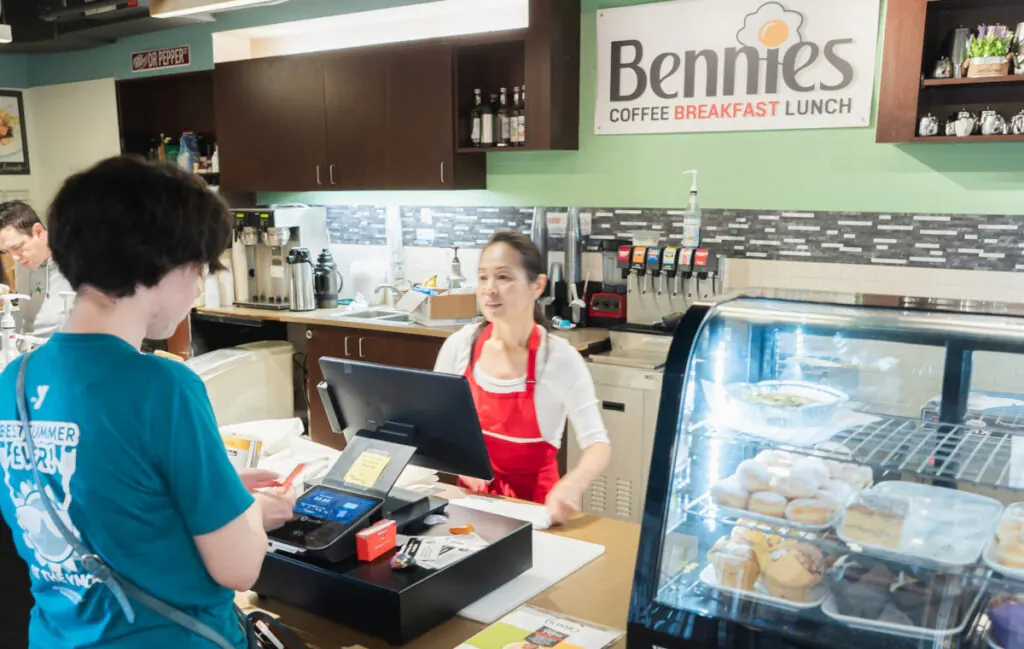
Bennies Cafe
17230 Jackson Creek Pkwy Ste 100, Monument, CO 80132
+1 719-445-0660
FAQ About Cafe
What is considered a café?
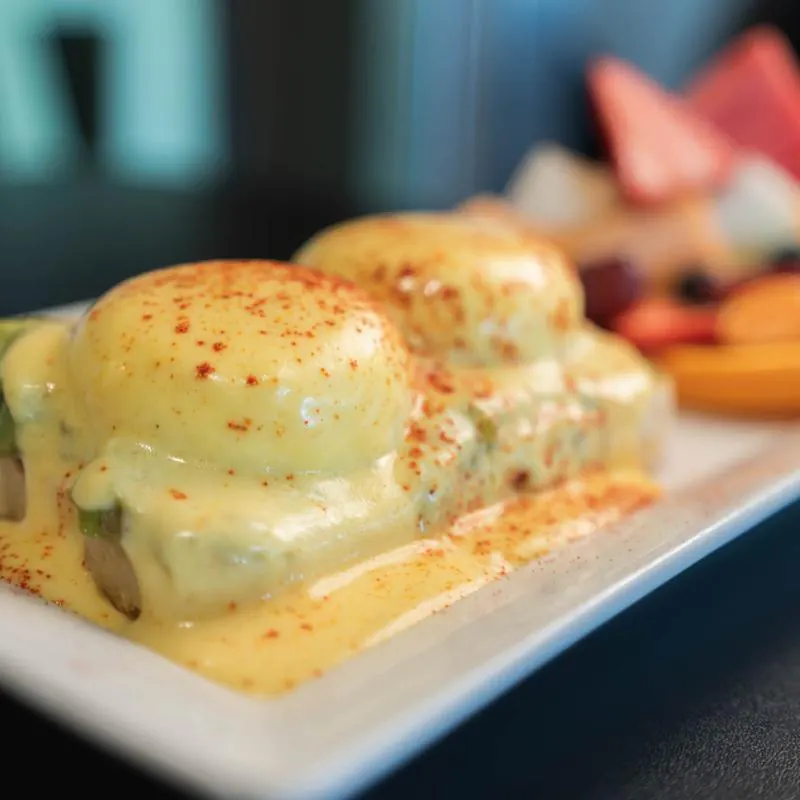
A café is generally an informal place to enjoy refreshments and a meal. Bennies Cafe in Monument serves breakfast and lunch in a counter-service setting, with options including eggs Benedict, sandwiches and crepes. Guests can eat in or arrange pickup.
What is the difference between a coffee shop and a café?
The terms often overlap. A coffee shop usually emphasizes coffee and other drinks, while a café may offer a broader food menu. Check the individual establishment's menu rather than relying on its name. Bennies Cafe offers coffee drinks alongside breakfast and lunch dishes.
What is the difference between café and coffee?
In everyday English, a café is a place where people buy food and drinks, while coffee is the beverage. The word café comes from the French word for coffee. Bennies Cafe serves options such as brewed coffee, espresso and lattes as part of its drinks menu.